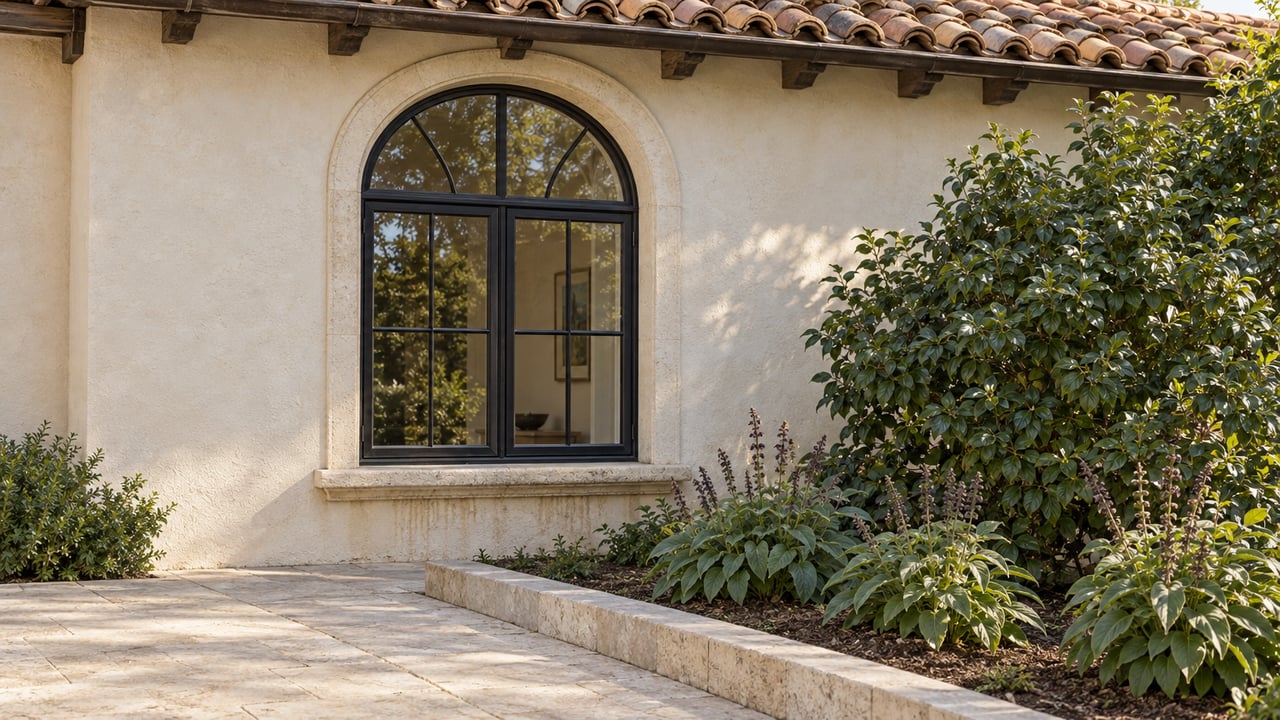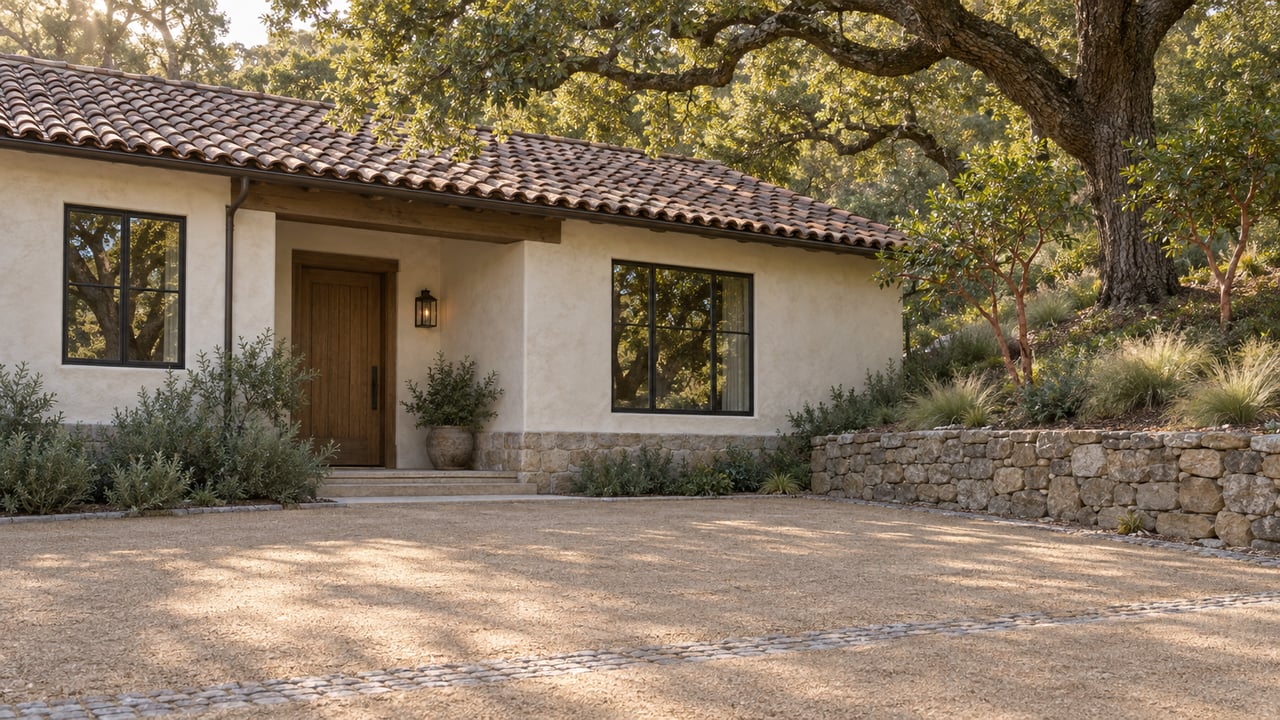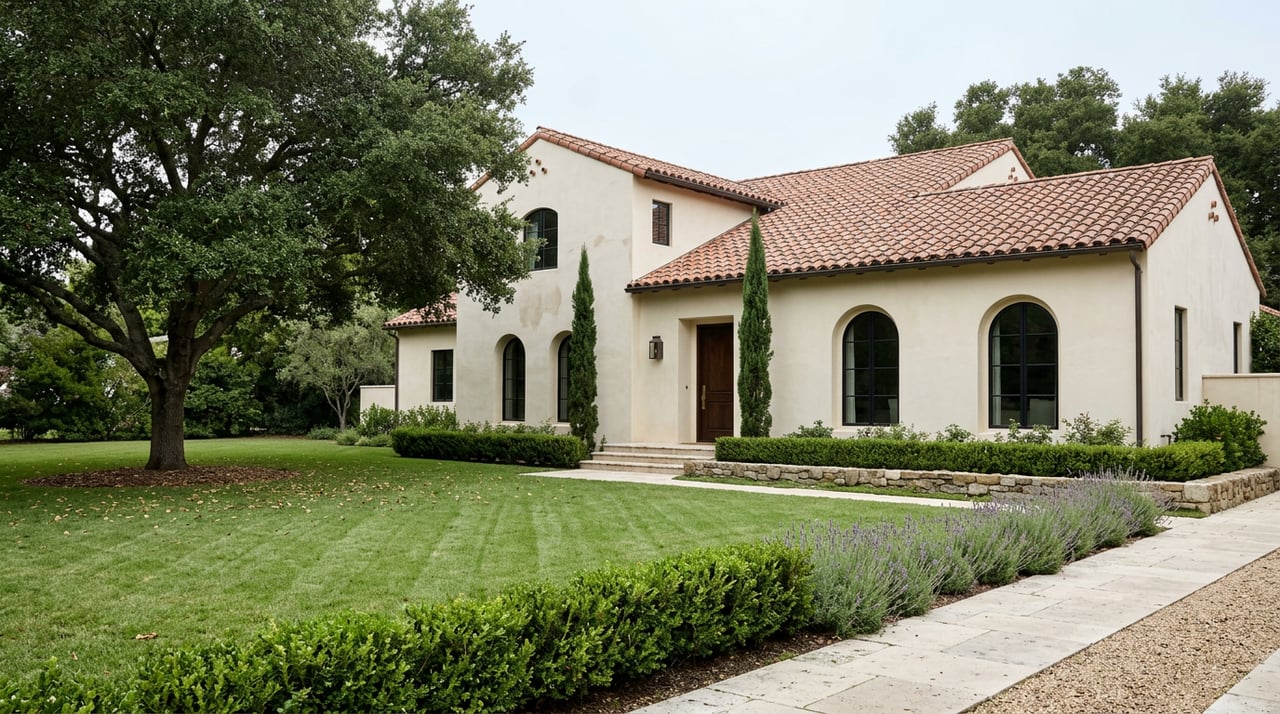
Fourteen offers came in on a four-bedroom, four-bath French Country house on Stockbridge Avenue in West Atherton last winter. The home itself was dated. Nobody making an offer seemed to care. As the listing agent put it to a reporter after the sale closed near $9.5 million: the home had no significant value. Buyers were paying for the flat, 1.157-acre lot underneath it.
That sentence is the whole Atherton market compressed into one line. If you are comparing this town to Palo Alto, Woodside, or Portola Valley and trying to work out what your money actually buys, the answer has less to do with square footage, finishes, or even condition than you might expect. It has to do with what the parcel is legally allowed to become.
The Math That Should Have Made the Deal Impossible
Run the numbers on that Stockbridge sale and they stop making sense as a housing transaction. A four-bedroom house near $9.5 million is already an outlier by most standards. Add the fact that buyers treated the structure as worthless and the price becomes a pure land bet.
That bet has been paying off. A 1.16-acre lot on Elena Avenue sold for $9.4 million in September 2024 and resold six months later for nearly a million dollars more, with no material change to the property in between. A property on Fairview Avenue, listed just under an acre for $7.89 million, closed at $10.7 million, nearly a third higher than a similarly sized neighbor had fetched eleven months earlier. Builders working in the town report construction costs running $2,200 to $2,600 per square foot, which puts a from-scratch 20,000 square foot estate at roughly $50 million on top of whatever the lot cost. Buyers are absorbing that math anyway, because the land is the part that cannot be replicated.
None of this reads like a typical renovation-versus-new-construction calculation. It reads like buyers pricing in something the zoning code controls and the market cannot manufacture more of.
What You Are Actually Bidding On
Atherton has no commercial zoning, almost no vacant developable land, and a residential code built around two districts: R-1A and R-1B. R-1A is the larger-lot district and it sets the tone for most of the town's estate character, with a one-acre minimum lot size as the baseline.
The size of that lot does not just determine your yard. It determines how much house you are legally permitted to build. Atherton's zoning ordinance sets the maximum floor area at 18 percent of lot size for parcels of an acre or larger. Run that through a full acre, 43,560 square feet, and the math allows roughly 7,840 square feet of house. Go slightly smaller and the formula changes entirely: floor area becomes 16.3 percent of lot size plus 726 square feet, with a hard floor of 2,250 square feet no matter how small the parcel.
That formula is why the Stockbridge buyers were not really evaluating four bedrooms and four baths. They were evaluating an entitlement, a legal allowance to build something in the neighborhood of 7,800 square feet on a flat, well-located acre. The existing house was a placeholder. The permit envelope was the asset.
Why One Acre Is Not Always One Acre
The one-acre figure gets repeated so often it starts to sound uniform, but the town's own subdivision standards tie minimum lot size to slope, and the jump is steep. On land under 20 percent slope, the standard holds at one acre with 175 feet of width and 200 feet of depth. Between 20 and just under 35 percent slope, the minimum doubles to two acres. At 35 percent slope or steeper, it rises to five acres.
| Slope | Minimum Lot Size | Minimum Width | Minimum Depth |
|---|---|---|---|
| Under 20% | 1 acre | 175 ft | 200 ft |
| 20% to 34.9% | 2 acres | 200 ft | 200 ft |
| 35% or more | 5 acres | 300 ft | 300 ft |
That table matters most for anyone looking at parcels on Atherton's western edge, where the land begins to roll toward Woodside. A lot that looks comparable to a flat one-acre parcel near the center of town can carry a legal minimum two to five times larger once slope is factored in, which changes both what you can build and what the land is worth per square foot.
The Number That Contradicts the Obvious Story
Here is where the West Atherton comparison gets interesting, and where the obvious explanation turns out to be wrong.
Over the three months ending in May 2026, West Atherton's median sale price sat near $18.0 million, up nearly 70 percent year over year, while the town overall posted a median closer to $10.9 million, up about 23 percent over the same stretch. The gap looks like a quality premium, the kind of markup you would expect from better architecture, better finishes, a more prestigious address.
Except the price per square foot tells a different story. West Atherton's median price per square foot over that same window was $2.49K. Townwide, it was $2.56K, slightly higher. The neighborhood commanding the largest total dollar figure in Atherton is not commanding the largest per-square-foot premium. It is commanding more square footage, full stop, because it sits on larger lots that the zoning code permits to hold more house.
That is the mechanism nobody states plainly enough. West Atherton is not more expensive because it is better built. It is more expensive because the acreage minimum lets buyers legally acquire more permitted square feet, and the FAR formula converts every additional square foot of lot into additional square feet of house. The premium is a function of quantity licensed by zoning, not quality delivered by construction.
What This Means If You Are Comparing Atherton to the Neighbors
Atherton became the nation's most expensive ZIP code in the first half of 2026, overtaking Fisher Island in Florida, with a median sale price near $9.93 million. That milestone gets attention because it is a clean, quotable number. It obscures the more useful fact for anyone actually shopping this market: the number is a function of what a fixed supply of zoned acreage can legally hold, not a referendum on the homes currently sitting on it.
If you are weighing Atherton against Palo Alto or Woodside, the comparison you actually want is not median against median. It is buildable envelope against buildable envelope. A dated house on a full, flat acre inside R-1A zoning is functionally a permit to build roughly 7,800 square feet, wherever the market eventually lets that permit be exercised. A newer house on a smaller, sloped, or R-1B parcel may show better on a walkthrough and still carry a lower ceiling on what it can ever become.
Two other details are worth checking before you get attached to a specific address. Atherton is designated an urban forest, and mature oaks or redwoods on a lot can trigger real restrictions on where new construction is allowed to sit, restrictions that show up in an arborist report rather than in a listing photo. And because the town is split across three separate elementary school districts, Las Lomitas, Menlo Park City, and Redwood City, two houses on the same block, on the same size lot, can carry different value simply based on which side of an administrative boundary they fall on. Neither of these facts shows up in the median price. Both of them show up in the offer.
Frequently Asked Questions
Does a full one-acre lot guarantee the maximum buildable square footage in Atherton? Not automatically. The 18 percent FAR calculation applies once a lot reaches one acre, but slope, setbacks, heritage tree protection, and existing easements can all reduce what is actually buildable below the formula's ceiling.
Why would a buyer pay more for a teardown than a renovated home nearby? When the structure itself is not expected to survive the purchase, its condition stops mattering. What buyers are pricing is the lot's legal capacity to hold a new structure, which is set by zoning rather than by the house currently standing on it.
Is West Atherton simply the most expensive part of town because of prestige? Address recognition plays a role, but the price data through May 2026 shows the per-square-foot cost in West Atherton running close to, and even slightly under, the townwide figure. The larger total price reflects larger permitted square footage on larger lots, not a higher cost for the same square foot of house.
Understanding how a permit envelope translates into a purchase price is exactly the kind of groundwork worth doing before you write an offer in a market this specific. If you are comparing Atherton to the surrounding Peninsula or weighing a lot against a listing photo, Adriana Trenev can walk through what a given parcel is actually entitled to build before you decide what it is worth to you. Schedule a consultation to start that conversation.